Are Chevy Trucks Made Of Aluminum? The Complete Guide to Silverado & Colorado Body Materials
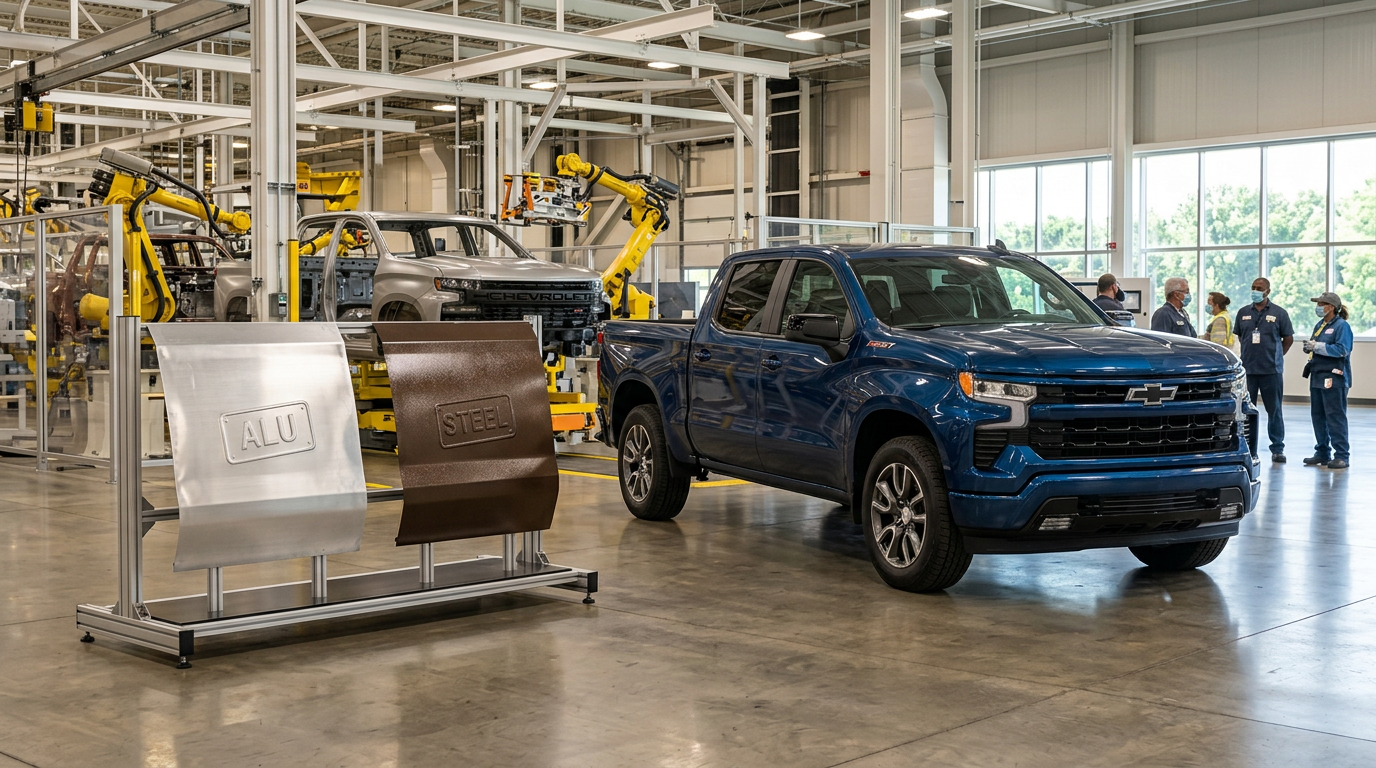
If you are in the market for a new or late-model pickup truck, you have undoubtedly stumbled into one of the most fiercely debated topics in the automotive world: body materials. Because modern trucks need to be lighter to meet stringent emissions and fuel economy standards—while simultaneously towing and hauling more weight than ever before—engineers have been forced to rethink how trucks are built.
This inevitably leads to a massive question for Chevrolet enthusiasts and prospective buyers: Are Chevy trucks made of aluminum?
The short answer is precisely what makes modern engineering so fascinating. Chevy trucks are not entirely made of aluminum, nor are they entirely made of steel. Instead, General Motors has adopted what is known as a “mixed-materials strategy.”
In this comprehensive guide, we will break down exactly which parts of a Chevy Silverado and Colorado feature aluminum, why Chevy refuses to build an all-aluminum truck, and how their high-strength steel engineering gives them a distinct edge in durability, payload capacity, and long-term cost of ownership.
Are Chevy Trucks Made Of Aluminum? The Short Answer
No, Chevy trucks are not entirely made of aluminum. Unlike their main competitor, the Ford F-150, which features a fully aluminum alloy body and truck bed, Chevrolet relies on a highly advanced “mixed-materials” approach.
The core of a Chevy truck—including the fully boxed frame, the safety cage surrounding the passengers, and the rugged truck bed—is constructed from advanced, high-strength steel. However, to save weight and improve fuel efficiency, Chevrolet strategically utilizes lightweight aluminum for several exterior “swinging” body panels, such as the doors, the hood, and the tailgate.
This approach is designed to offer truck owners the best of both worlds: the unyielding durability and puncture resistance of steel where you work and load cargo, alongside the weight savings of aluminum where durability is less of an everyday concern.
The Mixed-Materials Strategy: Where Chevy Uses Aluminum
When General Motors completely redesigned the Chevy Silverado 1500 for the 2019 model year (ushering in the T1XX platform), they had a specific goal: lose weight without losing toughness. By utilizing a mixed-materials strategy, Chevrolet managed to shave up to 450 pounds off the Silverado compared to the previous generation.
So, where exactly did that weight savings come from? Chevy engineers integrated lightweight aluminum into the following key components components:
1. Aluminum Doors
All the swinging doors on modern Chevy Silverados are crafted from aluminum. Because doors are heavy components that put constant, varying loads on hinges over the lifespan of a vehicle, lighter doors prevent hinge sagging. Furthermore, lighter doors are much easier for passengers to open and close, especially when parked on an incline.
2. The Hood
The hood is another massive piece of sheet metal. By switching to forged aluminum for the hood, Chevrolet effectively removed significant weight from the front end of the truck. Shedding pounds over the front axle improves the vehicle’s weight distribution, leading to better handling, shorter braking distances, and sharper steering response.
3. The Tailgate
If you have ever tried to manually lift the heavy steel tailgate of an older pickup with one hand, you understand why automakers wanted a change. Modern Chevy trucks utilize aluminum for the outer tailgate panels. While the inner portions that sustain the actual cargo weight rely on reinforced materials, the aluminum exterior skin makes the tailgate incredibly light, allowing for easy, one-handed operation and smooth dampening when dropping the gate.
4. Upper Control Arms and Suspension Components
While primarily associated with body panels, it is also worth noting that Chevy utilizes forged aluminum in various front suspension components, such as the upper control arms. This reduces “unsprung weight,” allowing the suspension to react faster to bumps and dips in the road, which drastically improves ride comfort.
High-Strength Steel: The Backbone of Chevrolet Trucks
While Chevy happily embraced aluminum to shed pounds on exterior panels, they drew a hard line in the sand when it came to the hardest-working parts of the truck. If you are hauling heavy equipment, tossing cinder blocks in the bed, or navigating treacherous off-road trails, high-strength steel is Chevrolet’s weapon of choice.
The Chevy Silverado “Durabed”
The defining feature of a Chevy truck’s material design is its cargo box, officially dubbed the Durabed. Simply put, the bed of a Chevy Silverado is made of roll-formed, high-strength steel—not aluminum.
Chevrolet utilizes a roll-forming manufacturing process rather than the traditional stamping process. Stamping stretches a single sheet of metal over a mold, which can thin out the corners and edges. Roll-forming, on the other hand, bends the steel continuously into shape. This ensures that the grain structure of the high-strength steel remains perfectly uniform, resulting in a significantly stronger, more dent-resistant truck bed.
In recent iterations of the Silverado, Chevy upgraded the yield strength of the steel in the bed from 340 megapascals to an astonishing 500 megapascals. This makes the Durabed incredibly resistant to punctures, tearing, and deep denting.
The Frame and Safety Cage
Beneath the sheet metal, a truck is only as strong as its foundation. Chevrolet trucks sit on a fully boxed ladder frame made of 80% high-strength steel. Ranging from 2 to 5 millimeters in thickness, this steel frame provides the torsional rigidity necessary for massive towing capacities and payload numbers.
Furthermore, the A-pillars, B-pillars, and roof structural bows (the “safety cage” surrounding the driver and passengers) are constructed from advanced high-strength steel. This rigid structure is engineered to direct crash energy away from the cabin in the event of an accident.
The Great Debate: Chevy’s Steel vs. Ford’s Aluminum
To fully answer the question “Are Chevy trucks made of aluminum?” you have to look at the automotive landscape. The entire discussion was sparked in 2015 when Ford made the revolutionary (and risk-heavy) decision to switch the F-150 to a completely “military-grade” aluminum-alloy body and bed.
Chevrolet capitalized on this by launching a highly aggressive, memorable marketing campaign. You likely remember the commercials: a load of jagged landscaping blocks or heavy metal toolboxes being unceremoniously dumped from a front-end loader into the beds of two unbranded (but obvious) trucks.
The aluminum bed suffered deep gouges and severe punctures, while the Chevy’s high-strength steel bed survived with only surface scratches and minor dents. This rivalry highlights the very real, practical differences between the two engineering philosophies.
1. Durability and Puncture Resistance
As Chevy’s marketing highlighted, steel boasts higher tensile strength and puncture resistance than aluminum. When dropping heavy, sharp objects (like scrap metal, rocks, or engine blocks) into an aluminum bed without a spray-in bed liner, there is a significantly higher risk of tearing the metal. Steel might dent under extreme velocity, but it rarely tears. For construction workers and heavy-duty users, a steel bed offers unparalleled peace of mind.
2. Weight Reduction and Fuel Efficiency
Ford’s entirely aluminum body shed upwards of 700 pounds from the F-150, which provided massive gains in towing capacity and fuel economy. Chevy realized they could not ignore the laws of physics. By adopting their mixed-materials strategy, Chevy managed to achieve similar weight savings (losing roughly 450 pounds) without sacrificing the rugged steel bed. They improved their fuel economy and payload capacity while keeping the traditional toughness truck owners expect.
3. Repair Costs and Insurance
This is an often-overlooked factor. Steel is the most common automotive material in the world. Almost every auto body shop across the globe is equipped to bang out, weld, and repair steel panels.
Aluminum behaves differently. When aluminum is dented, it has a “memory” and is much more difficult to pull back into shape—it often requires total panel replacement. Furthermore, welding aluminum requires specialized equipment and environments (to prevent galvanic corrosion caused by cross-contamination with steel dust). Therefore, minor collision repairs on an all-aluminum body can result in higher auto body shop bills and, consequently, higher insurance premiums compared to steel-dominated vehicles.
Does the Chevy Colorado Use Aluminum?
Much like its full-size older brother, the mid-size Chevy Colorado also relies on a mixed-materials approach. It features an incredibly tough, fully-boxed high-strength steel frame to handle severe off-roading (especially in the ZR2 trims) and heavy towing.
The Colorado’s bed is strictly made of high-strength, roll-formed steel to ensure it can take the abuse of dirt bikes, ATVs, and overlanding gear. However, the Colorado also utilizes aluminum in key areas, such as the hood, to trim the excess fat, giving you a nimble, responsive mid-size truck with an excellent power-to-weight ratio.
Advantages of Chevy’s Mixed-Materials Engineering
By asking “Are Chevy trucks made of aluminum?” you uncover a highly calculated engineering philosophy. General Motors didn’t avoid aluminum; they just restricted it to where it makes the most sense. Here are the core benefits of this design choice:
- Maximum Payload Optimization: By saving weight on the hood and doors with aluminum, those saved pounds are directly added to the truck’s maximum payload capacity.
- Best-in-Class Cargo Volume: Because roll-formed steel is so incredibly strong, Chevy can make the sides of the Durabed thinner without losing structural integrity. This pushes the interior walls of the bed further out, giving the Silverado class-leading standard cargo space.
- Easier Maintenance: Steel frames and beds are easier and cheaper to repair after mild-to-moderate collisions, saving owners money at the body shop.
- Lower Center of Gravity: Using lighter aluminum high up (hoods and doors) and heavy steel low down (the frame) lowers the truck’s overall center of gravity, significantly improving cornering stability and rollover resistance.
Frequently Asked Questions (FAQ)
1. Does the Chevy Silverado have an aluminum body or a steel body?
The Chevy Silverado features a mixed-material body. The doors, hood, and tailgate exterior are made of lightweight aluminum. However, the core structural components—including the fenders, the roof, the safety cage, and the truck bed—are made of high-strength steel.
2. Why don’t Chevy trucks use aluminum beds?
Chevrolet engineers believe that truck beds require the highest possible puncture and impact resistance because they endure the most physical abuse. High-strength, roll-formed steel is significantly more resistant to tearing and puncturing than aluminum, making it the superior choice for hauling heavy, jagged, or unrefined cargo.
3. Will the steel in a Chevy truck rust quickly?
While steel is inherently susceptible to rust, modern Chevy trucks are heavily treated to prevent corrosion. Chevrolet uses galvanized steel (steel coated in a protective layer of zinc) for its body panels, along with advanced factory e-coating, anti-corrosion dips, and underbody treatments to ensure the truck withstands harsh weather, snow, and road salt for years.
4. Which is heavier: high-strength steel or aluminum?
Steel is significantly heavier and denser than aluminum. Aluminum is roughly one-third the weight of steel. However, because high-strength steel is so inherently strong, automakers can use thinner sheets of it to achieve the desired durability, which helps mitigate some of the weight differences in modern automotive manufacturing.
5. Does the GMC Sierra use the same materials as the Chevy Silverado?
Yes. Both the Chevy Silverado and the GMC Sierra are corporate cousins built by General Motors on the same T1XX platform. They utilize the exact same mixed-materials strategy: aluminum hoods, doors, and tailgates, paired with a high-strength steel frame and bed. (Note: GMC does offer a specialized CarbonPro carbon-fiber composite bed as an exclusive premium upgrade on the Sierra, which is neither steel nor aluminum).
Conclusion: The Best of Both Worlds
So, are Chevy trucks made of aluminum? The answer is a resounding “partially.”
Chevrolet’s decision to avoid an all-aluminum body is not a rejection of modern technology; rather, it is a masterclass in putting the right materials exactly where they belong. By utilizing lightweight aluminum for exterior panels like doors and hoods, Chevy trucks achieve excellent fuel economy, nimble handling, and massive payload ratings.
Yet, by retaining a high-strength, roll-formed steel truck bed and fully boxed frame, the Chevy Silverado and Chevy Colorado preserve the legendary durability, puncture resistance, and long-term repairability that generations of truck owners have come to rely on. Whether you are daily driving on the highway or hauling scrap metal on the job site, Chevy’s mixed-material strategy ensures your truck is light on its feet, but tough where it counts.