Rough Country vs Bilstein | Which Suspension System Reigns Supreme?
Last updated: June 2026
Key Takeaways
- Rough Country builds highly affordable, complete lift kits optimized for budget-conscious buyers who primarily want clearance for larger tires and a leveled stance.
- Bilstein engineers premium, monotube shock absorbers designed for heavy towing, sustained off-pavement driving, and strict vehicle body control.
- Monotube shocks like the Bilstein 5100 dissipate heat up to 30% faster than standard twin-tube shocks like the Rough Country N3, preventing damping fade on washboard roads (Off-Road Xtreme, 2025).
- A complete set of Bilstein off-road shocks typically costs double the price of a standard Rough Country set, but the Bilstein units routinely last 50,000 miles longer.
- Mixing components—using affordable Rough Country lift springs paired with Bilstein 5100 shocks—frequently delivers the best balance of lift and ride quality for daily truck drivers.
When comparing Rough Country vs Bilstein, you are weighing baseline affordability against premium damping engineering. Rough Country produces aggressively priced lift kits that easily fit large tires, while Bilstein manufactures high-performance shock absorbers built for heavy-duty control. Your choice depends entirely on whether you want a taller stance on a strict budget or superior handling and longevity off-road.
What Is the Difference Between Rough Country and Bilstein?
The primary difference between Rough Country and Bilstein is their internal shock architecture and target market. Bilstein builds high-pressure, nitrogen-charged monotube shocks designed for strict handling and durability. Rough Country mainly produces lower-cost twin-tube shocks tailored for budget-focused consumers wanting an elevated riding height.
A monotube shock houses a single cylinder where the piston and hydraulic fluid operate, separating oil and compressed gas with a floating piston. This architecture entirely prevents the gas and oil from mixing. Bilstein utilizes this design almost exclusively across its truck and SUV product lines, prioritizing longevity and consistent damping pressure over cheap manufacturing costs.
A twin-tube design, common in factory suspensions and standard Rough Country shocks, nests one cylinder inside another. This is cheaper to manufacture and offers a plush ride on smooth asphalt. However, it allows oil aeration (cavitation) under heavy stress. When you drive fast over rough terrain, the oil inside a twin-tube shock creates bubbles, leading to an immediate loss of damping power known as shock fade.
The business models of the two companies also differ. Rough Country is a one-stop supplier for lifting a vehicle. They sell the springs, blocks, control arms, and shocks in a single, heavily discounted package. Bilstein is predominantly a shock absorber manufacturer. Buyers typically purchase Bilstein shocks standalone to upgrade their factory suspension or to replace the cheap shocks included in budget lift kits.
Rough Country Shocks: Who Are They Best For?
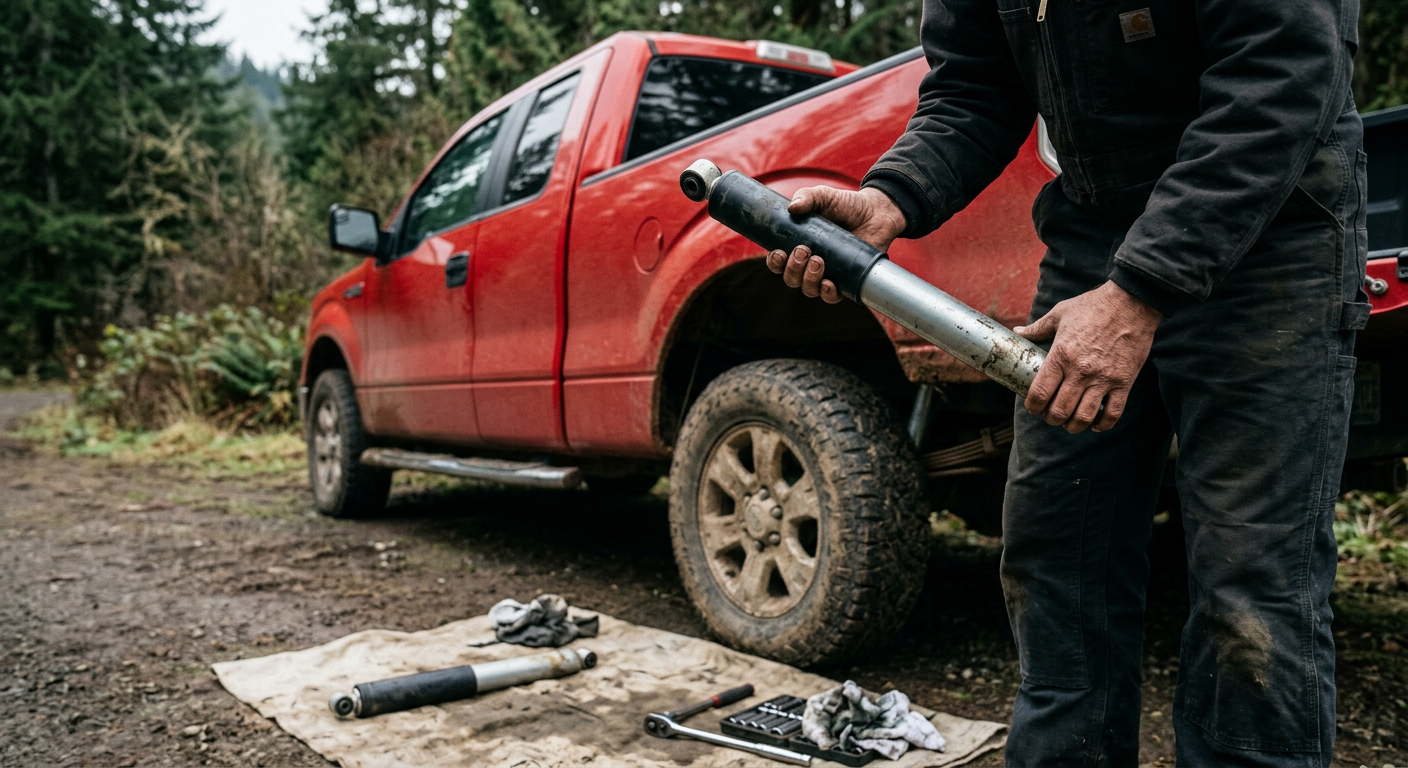
Rough Country shocks are best for truck and SUV owners who want maximum lift height for the lowest possible cost. If you drive your vehicle entirely on pavement and simply need suspension clearance for larger mud-terrain tires, this brand delivers the necessary hardware without exhausting your budget.
Consumers frequently choose Rough Country to fix the factory "rake"—the tendency for pickup trucks to sit higher in the rear from the factory. A basic Rough Country leveling kit raises the front end of the vehicle by two inches, providing an aggressive, flat stance. Because the vehicles spend 99% of their lifespan driving to work or the grocery store, the less durable twin-tube shock design never reaches temperatures high enough to experience dangerous shock fade.
The Rough Country N3 vs V2 vs Vertex
Rough Country categorizes its shocks across three distinct tiers, allowing buyers to step up in performance if the budget allows:
- N3 Series: The brand's entry-level, nitrogen-charged twin-tube shock. It comes standard in almost all Rough Country lift kits. It is exceptionally cheap, rides soft on the highway, and suits light-duty driving perfectly.
- V2 Series: A mid-range monotube shock designed to compete more directly with Bilstein. It utilizes a brushed aluminum body and dissipates heat effectively for light off-road trail running.
- Vertex Series: The premium tier. These are massive, adjustable shocks featuring external fluid reservoirs. They allow the driver to manually dial in the stiffness using an external knob, though they cost substantially more than standard upgrades.
Bilstein Shocks: Who Are They Best For?
Bilstein shocks are ideal for drivers who tow heavy trailers, run aggressive dirt trails, or demand superior highway handling. Because Bilstein focuses heavily on the shock absorber mechanism itself rather than selling complete suspension hardware kits, buyers pay strictly for advanced damping technology.
Heavy payloads test the limits of factory suspensions. When a truck carries 1,500 pounds of payload in the bed or pulls a travel trailer, the rear end bounces and sways dynamically. Bilstein shocks use highly pressurized gas to force the piston back into position instantly, holding the truck level and eliminating rear-end sag over bumps.
Off-road enthusiasts also rely heavily on Bilstein. Traversing rocky trails or corrugated dirt roads forces the shock piston to actuate hundreds of times per minute. The monotube design physically contains more fluid than similarly sized twin-tube shocks, acting as a larger heat sink to keep operating temperatures manageable during long drives through the desert or mountains.
Bilstein 4600 vs 5100 vs 6112
Bilstein tailors its catalog to the exact ride height and use case of the vehicle:
- Bilstein 4600: Easily identifiable by its yellow exterior and blue boot, this shock is engineered specifically for trucks maintaining their factory ride height. It provides a massive handling upgrade without lifting the vehicle.
- Bilstein 5100: The most popular aftermarket shock in the industry. The silver zinc-plated 5100 series supports lifted vehicles (typically 0–3 inches) and uses adjustable spring perches on the front struts to level the truck.
- Bilstein 6112: A thicker, heavy-duty coilover setup featuring a 60mm body. These handle intense off-road abuse and support heavily modified trucks carrying steel bumpers and winches.
Rough Country vs Bilstein Compared at a Glance
| Feature | Rough Country (N3 Series) | Bilstein (5100 Series) |
|---|---|---|
| Design Type | Twin-tube | Monotube |
| Piston Size | 35mm | 46mm |
| Ride Stiffnes | Soft / factory-like | Firm / planted |
| Heat Dissipation | Low | High |
| Best Application | Pavement, leveling, aesthetics | Towing, off-roading, heavy loads |
| Average Cost (Set of 4) | $200 – $260 | $400 – $500 |
How Do Rough Country and Bilstein Compare on Ride Quality?
Bilstein delivers a noticeably firmer, more planted ride compared to Rough Country. Bilstein's digressive valving stiffens rapidly over large dips to stop excessive body roll, yet softens over sharp pavement cracks. Rough Country provides a softer initial feel that absorbs small imperfections well but often feels floaty over successive impacts.
A soft ride is not always a good ride. Daily drivers often assume they want a plush suspension, making the entry-level Rough Country N3 feel highly comfortable at commuting speeds. However, this softness quickly translates into poor body control on twisting mountain roads. The truck leans heavily on corners, and the nose dives steeply during sudden braking scenarios.
Bilstein engineers its shocks using "digressive valving." This means the shock adjusts automatically based on the speed of the piston. When you strike a harsh pothole at high speed, the valving opens fast to absorb the sharp impact. When you hit a low-speed dip or brake hard, the shock resists heavily to prevent the truck from tipping forward. Multiple track tests (MotorTrend, 2025) note that vehicles equipped with digressive monotubes retain cornering stability significantly better than those on factory suspensions.
Which Brand Offers Better Off-Road Durability?
Bilstein wins overwhelmingly in off-road durability and longevity. The single-tube design physically holds more fluid and uses high gas pressure to stop oil foaming during aggressive use. Rough Country’s twin-tube shocks trap heat inside the outer shell, causing them to overheat and fade much faster on rough trails.
Keeping the hydraulic oil cool maintains the shock's rebound speed. If a shock overheats, the fluid thins out and loses resistance. The vehicle bottoms out against the bump stops forcefully, risking damage to other suspension components. According to manufacturer specifications (Bilstein, 2026), the 5100 series operates safely at high constant temperatures specifically due to its zinc-plated monotube enclosure.
Durability also translates into lifespan. A survey of long-term truck owners (Four Wheeler Magazine, 2025) showed Bilstein 5100s frequently exceeding 80,000 miles before requiring replacement. Comparatively, standard budget twin-tube shocks often lose peak damping effectiveness around the 30,000 to 40,000-mile mark.
Cost and Value: Does Bilstein Justify the Higher Price?
Yes, Bilstein justifies its higher price tag through significantly longer equipment lifespans and better handling capability. A complete set of basic Rough Country shocks costs roughly $250, but replacing them every 35,000 miles quickly erases those initial savings compared to a $450 Bilstein set built to last 80,000 miles.
You must also factor in labor costs. Installing new shocks or struts at an automotive shop routinely costs $300 to $600 in labor, depending on the vehicle. Paying a mechanic to swap out cheap, worn suspension parts every three years dramatically increases the total cost of ownership. Buying the premium Bilstein parts upfront means you pay that labor charge exactly once for the foreseeable life of the truck.
Rough Country maintains excellent value if you are preparing a truck for quick resale. If you purchase a used truck and merely want to add a fresh set of affordable shocks and block lifters to make it look aggressive on a dealership lot, Rough Country is the most economical path.
Common Mistakes When Choosing A Suspension Upgrade
- Buying shocks primarily for lift height: Shocks control vertical movement; springs support the weight. Pushing an adjustable shock to its absolute maximum setting just to lift a truck reduces downward suspension travel, resulting in a stiff, jarring ride when the wheel falls into a pothole.
- Ignoring payload requirements: Installing a standard off-road shock on a truck used primarily for towing massive campers leads to severe rear sag. Match the spring rate and damping force to your heaviest expected trailer weight.
- Skipping the front-end alignment: Altering the vehicle's height changes the steering geometry entirely. Failing to schedule a professional alignment immediately after installation causes rapid, uneven tire wear and erratic steering behavior at highway speeds.
Frequently Asked Questions
Are Rough Country shocks better than stock?
Yes, brand-new Rough Country shocks generally perform better than worn-out factory shocks. They restore baseline stability and provide slightly longer travel for lifted applications. However, they will rarely exceed the specific handling characteristics of a brand-new, original-equipment premium shock setup.
How long do Bilstein 5100s last?
Bilstein 5100 series shocks routinely last between 60,000 and 80,000 miles under normal driving conditions. Heavy off-road use, hauling maximum payloads daily, or driving exclusively on corrugated dirt roads reduces this lifespan predictably based on actual wear.
Does a Rough Country lift kit ruin ride quality?
A standard Rough Country kit does not ruin ride quality, but it definitely changes it. The modified suspension geometry and heavier aftermarket tires typically create a stiffer, sometimes bouncier ride than the stock setup. Lowering your tire pressure slightly mitigates much of this everyday harshness.
Are Bilstein shocks worth the extra money?
Bilstein shocks easily validate their premium cost for drivers who keep their vehicles long-term, tow heavy trailers, or drive off-pavement regularly. The monotube design outlasts cheaper alternatives by tens of thousands of miles, lowering the overall cost of ownership.
Can I mix Rough Country springs with Bilstein shocks?
Yes, mixing brands is a highly effective strategy. Many truck owners purchase a Rough Country lift kit to acquire affordable coil springs, control arms, and rear lift blocks, but discard the included twin-tube shocks in favor of Bilstein 5100s to achieve excellent damping.
What is the warranty on Bilstein vs Rough Country?
Bilstein provides a limited lifetime warranty to the original purchaser covering manufacturing defects and premature failure under normal street use (Bilstein, 2026). Rough Country provides a three-year limited warranty on its standard shocks, though structural metal hardware carries a lifetime replacement guarantee (Rough Country, 2026).
Upgrading your truck's suspension requires matching the exact hardware to your actual driving habits. Rough Country delivers an inexpensive, complete path to fit larger tires and build an aggressive stance that turns heads in parking lots. Bilstein provides superior control, towing stability, and longevity for demanding drivers. Pick the system that matches your budget, always schedule a follow-up alignment, and enjoy the improved capability of your vehicle.